


Jecheon is two hours from Seoul and almost nothing about it exists in English. It is not remote, it is not difficult, and it is not a secret to Koreans — who come here for the lake, the herbs and the mountain air. It is simply a place the international guidebooks skipped.
We have been running trips here since 2023. This is the overview we wish had existed when we started.
Where it is
Jecheon sits inland in the north of Chungcheongbuk-do, in the hills. From Seoul Station it is about 2 hours by road (144 km), and there is a direct train. That is closer than Busan and much closer than Jeju — it is the kind of distance where people assume there must be nothing worth the drive, and they are wrong.
The lake, and the cable car over it
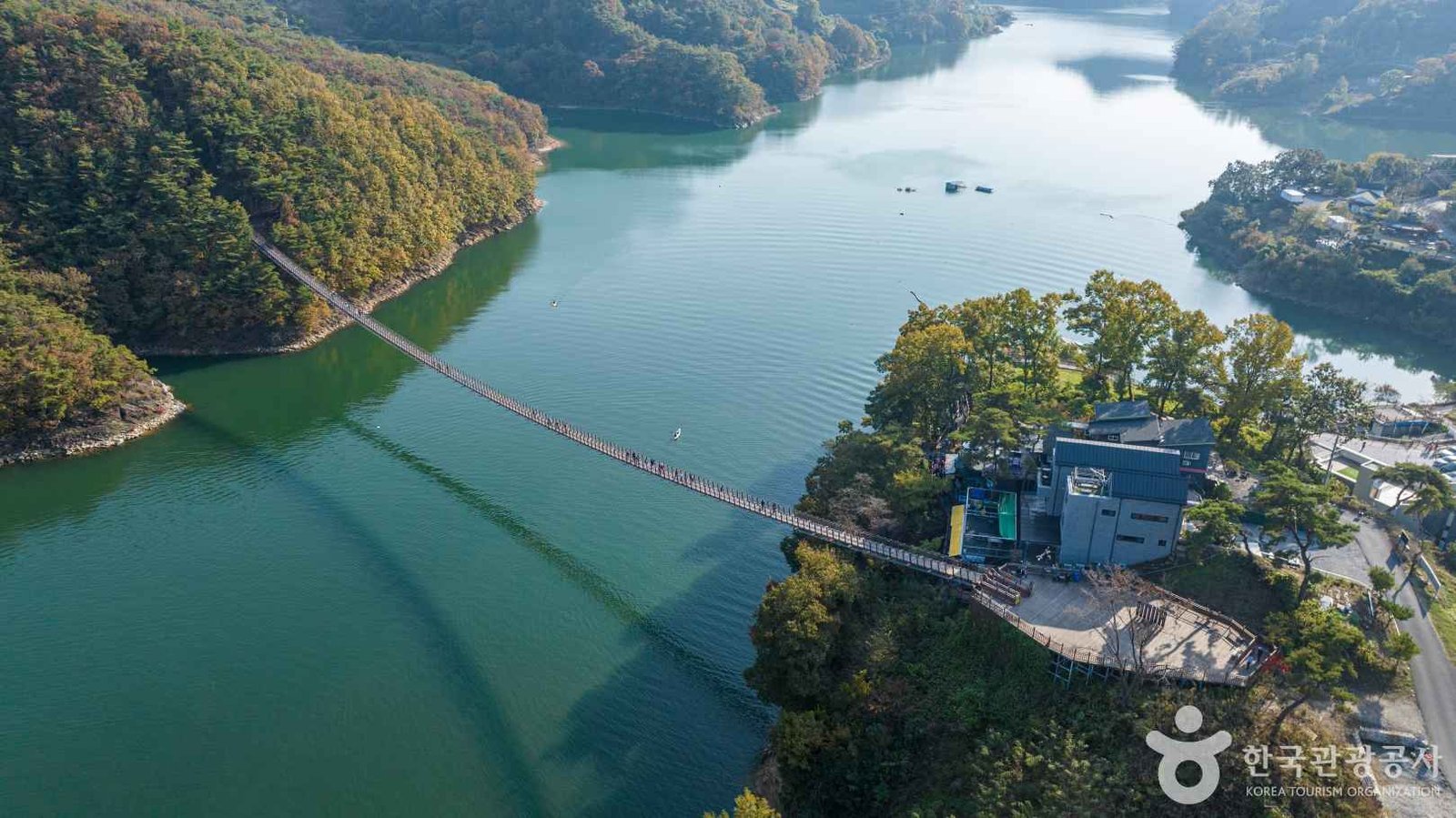
The big draw is Cheongpung Lake, a reservoir that drowned a valley and left the hilltops standing as islands. A cable car climbs the ridge above it — about 24 minutes and 20 km from the town centre — and the view from the top is the one that sells the place.
Below, the Oksunbong cliffs rise straight out of the water. There is a suspension bridge strung across for the view back at them.
Uirimji: a reservoir older than most countries
Nine minutes from the town centre is Uirimji, one of the oldest surviving reservoirs in Korea — named in the same breath as Byeokgolje in Gimje and Susanje in Miryang.
Nobody agrees on exactly when it was dug. The most widely held view puts it in the Samhan period; others argue for the Three Kingdoms, and a local tradition credits the Silla musician Ureuk in the sixth century. The honest answer is that scholars are still arguing.
What is not in dispute is that it still works. It has been irrigating these fields for something like two thousand years, and people walk around it in the evening as if it were an ordinary park.
Herbs: the part that surprises people
Jecheon is one of Korea’s centres for herbal medicine. The trade goes back to the Joseon period, the herbal medicine market still runs, and the surrounding hills are full of farms growing the raw material.
You can eat the result. Restaurants here build whole meals around medicinal herbs — which sounds austere and is in fact very good.
And the ordinary things
Not everything here is scenic or ancient. The local market sells a red fish cake fierce enough to be famous. There is a village painted with traditional folk art. There is a resort for people who want to do nothing at all.
- The red fish cake at the local market
- The folk-painting mural village
- A resort for families
- What else you will see in Jecheon
- Why we call it the hidden gem of Chungcheongbuk-do
When to come
Autumn is the obvious answer — the hills turn and the lake reflects it. It is also when the air turns sharp inland, much colder than Seoul on the same day, and visitors routinely underdress. We wrote a packing note for a group travelling in October that still holds: what to bring for Jecheon in autumn.
Spring and summer are green and quiet. Winter is cold, and the cable car in cloud is just cloud.
How long you need
Two days is enough for the lake, the cable car and a proper meal. Three or four lets you add Danyang and Chungju next door, which is how we usually build it — the three towns sit along the same water and it would be strange to see only one.
Why we keep coming back
Because it is the kind of place our travellers remember. Not because it is spectacular — Korea has more spectacular — but because there are no crowds, nobody is selling you anything in English, and the woman serving your lunch grew the herbs in it.
That is getting harder to find.
Our Jecheon trips
Private, your group only, with an English-speaking driver-guide from Seoul.
Chungju, Jecheon & Danyang, 4 days 3 nights — from $1,647 per person
Jecheon food trip, 2 days 1 night — ask us for dates and a price
Tell us your dates and we will come back with a plan and a price.
Photograph: ©Korea Tourism Organization — Kim Jiho. Used under the Korea Open Government License (KOGL) Type 1.
0 Comment