

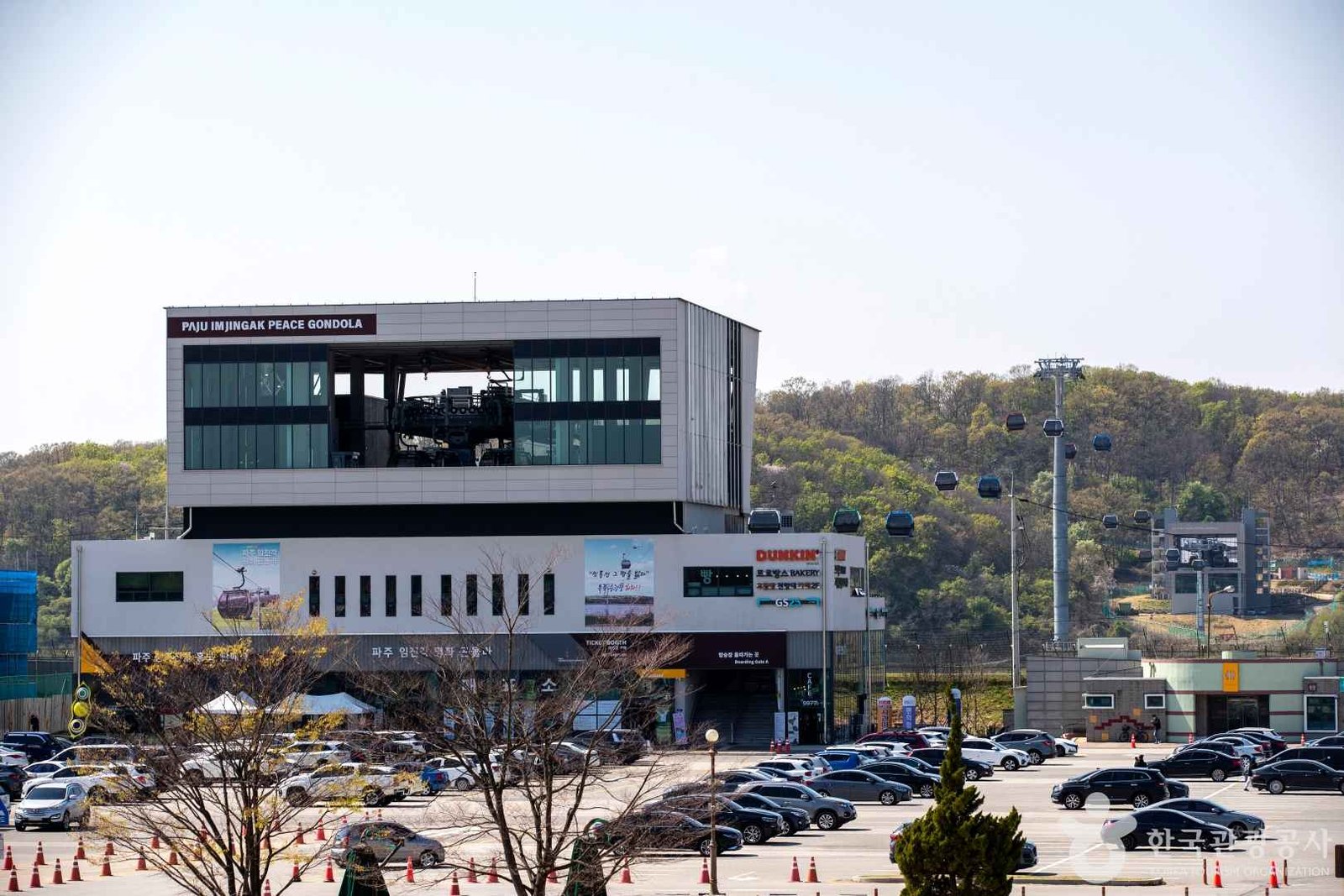

Here is the part most DMZ pages skip: past the Civilian Control Line, you cannot drive yourself. Not in a rental car, not in a taxi, not with a Korean friend. The Third Tunnel and Dora Observatory sit inside a controlled military area, and you reach them on a registered tour or you do not reach them at all.
So the real question is not whether to take a tour. It is which kind — a coach with forty strangers on a fixed clock, or your own vehicle and your own guide.
What you need, whichever you choose
- Your physical passport. A photo on your phone will not do. It is checked at the gate past Unification Bridge, and if you have left it at the hotel you are turned around — usually with no refund.
- Booking in advance. Operators submit passenger details beforehand; lead times vary by operator and some want several days.
- Flexibility. Individual sites close for military activity or weather, sometimes on the day.
Imjingak itself, on the near side of the line, is free and open to anyone. Everything beyond it is not.
About the JSA — the blue huts
The Joint Security Area at Panmunjom, with the pale blue buildings straddling the line, is the image most people have in mind. It is closed. You cannot go.
It has been shut to visitors since July 2023 and it has not reopened. The JSA was never part of a normal DMZ day trip in any case: it is a separate permit, controlled by United Nations Command, and the decision is theirs, not the travel industry’s.
You will still find the JSA advertised online, because old pages do not get taken down. If an operator offers you the blue huts, ask them to confirm it in writing before you pay anything. We will tell you the day it opens again — we would like to take you there too.
The western DMZ: Paju
This is the one most visitors mean. From Seoul it is a morning’s drive.
- Imjingak — the park on the civilian side, with the Freedom Bridge and a rusting steam locomotive shot full of holes during the war. Free, and the point where ID gets checked.
- The Third Infiltration Tunnel — dug by the North towards Seoul, found in 1978. You walk down into it. It is low, wet and genuinely claustrophobic; a hard hat is not decoration.
- Dora Observatory — binoculars pointed at a North Korean village across the valley. Ticketing runs roughly 09:00 to 15:00 and can close earlier when it is busy.
- Dorasan Station — a railway station built for trains to Pyongyang that have never run.
On a big coach you get all of this on a clock that is not yours, and you queue twice at every checkpoint because forty passports take longer than four.
The eastern DMZ: Yanggu, and why we prefer it
The border does not stop at Paju. It runs 250 km across the peninsula, and the eastern half — mountains, not farmland — is where almost no coach goes.
In Yanggu, in Gangwon-do, the line sits among steep forested hills. Because the terrain is harder, the fighting here lasted longer and the scars are more obvious. The Punchbowl, a bowl-shaped basin ringed by ridges, got its name from American officers looking down into it. The Dootayeon valley is closed to civilians except with an accredited guide, which is why it is still clear water and silence.
Yanggu also puts you at the geographic centre of the Korean Peninsula — a monument marks it, and you walk the last 800 m uphill to reach it.
It is quieter, it takes longer, and it is a completely different experience from standing in a queue at Dora.
We have written Yanggu up in full — the entry application, the season the observatory closes, and what is actually there.
We filmed one of these trips
Delicious Yanggu DMZ trip with K-granny — eight minutes on our YouTube channel.
So: bus or private?
A coach is cheaper, and if the DMZ is a box to tick on a Seoul weekend, take the coach. We will say that plainly.
Go private if you want to stop where you want, ask questions the whole way, skip the souvenir shop, or go somewhere a coach does not run at all — which is most of the border.
Our DMZ trips
Private, your group only, with an English-speaking driver-guide. We handle the permits and the paperwork.
Yanggu, the eastern DMZ, 3 days 2 nights — from $1,194 per person
Paju, the DMZ & Goyang, 4 days 3 nights — from $1,647 per person
Northern & Central Korea, 6 days 5 nights — from $2,553 per person
Tell us your dates and we will come back with a plan and a price.
Photograph: ©Korea Tourism Organization — Lee Bumsu. Used under the Korea Open Government License (KOGL) Type 1.
0 Comment